




Global Markets
Tradable Products
Featured Products

After a highly publicized Initial Public Offering (IPO) process, shares of Anthropic (NASDAQ: ANT) began trading in the open market on November 19, trading over 850 million shares and finishing their first day of trading more than $14, or 17%, above the initial offering price.
Listed options will begin trading on Monday, November 23, the earliest possible date under Cboe Rule 4.3, which allows options on IPOs valued at $3 billion or more at the offer price to list on the second business day. All 20 U.S. options exchanges are expected to list the options on this date or shortly thereafter.
At launch, pricing increments for option quotes will be nickels under $3 and dimes at or above $3, with auctions and other price improvement mechanisms permitting penny price increments. ANT options could later be added to the list of symbols eligible for penny increment quotes under exchange rules.
Available expirations will include standard monthly contracts and longer-dated LEAPS. Weekly Friday expirations will be added later in the week, with the first expiring Friday, November 27, a shortened trading session. Weekly series are typically added on Thursdays or Fridays, but because Thursday, November 26 is a market holiday, the opening date moves to Wednesday, November 25. A weekly expiring December 4 would follow.
Monday and Wednesday weekly expirations, currently offered on a limited number of highly liquid single stocks and ETFs, are determined by quarterly eligibility criteria rather than by request. Those criteria cover market capitalization, options volume and participation in the Penny Interval Program. ANT is therefore unlikely to qualify at launch.
Strikes will be set from levels roughly 50% above and below the spot price when listed. With ANT trading near $87, monthly and longer-dated options are expected to list in $5 increments (for example, 80, 85, 90, 95), and the exchanges may also add $2.50 strikes below $100, such as 85.50 and 87.50. Weekly options may list in tighter increments: $0.50 below $100 and $1 between $100 and $150. Intervals are tied to the share price, so $2.50 strikes would not extend above $100 if ANT trades higher.
Eligibility for the recently launched 7:30 a.m. to 9:25 a.m. ET Global Trading Hours (GTH) session and the 4:00 to 4:15 p.m. ET curb session is determined by exchange designation, with timing to be announced.
ANT options are expected to be eligible for FLexible EXchange (FLEX) options trading at launch, permitting customized expiration dates, exercise style and strike selection. FLEX options are often used in securities financing (stock loan) trades and option-strategy ETFs. Equity FLEX options are physically settled.
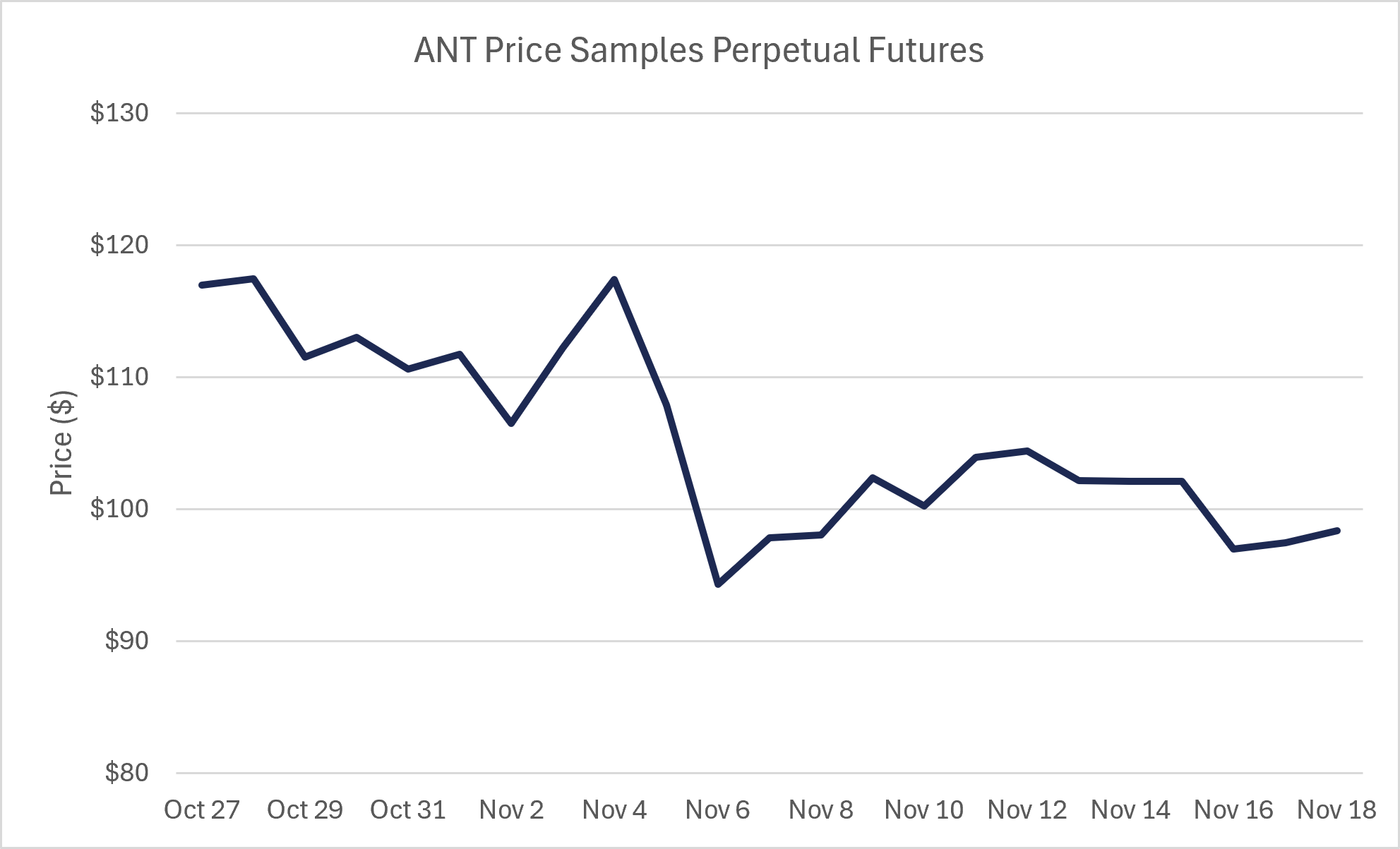
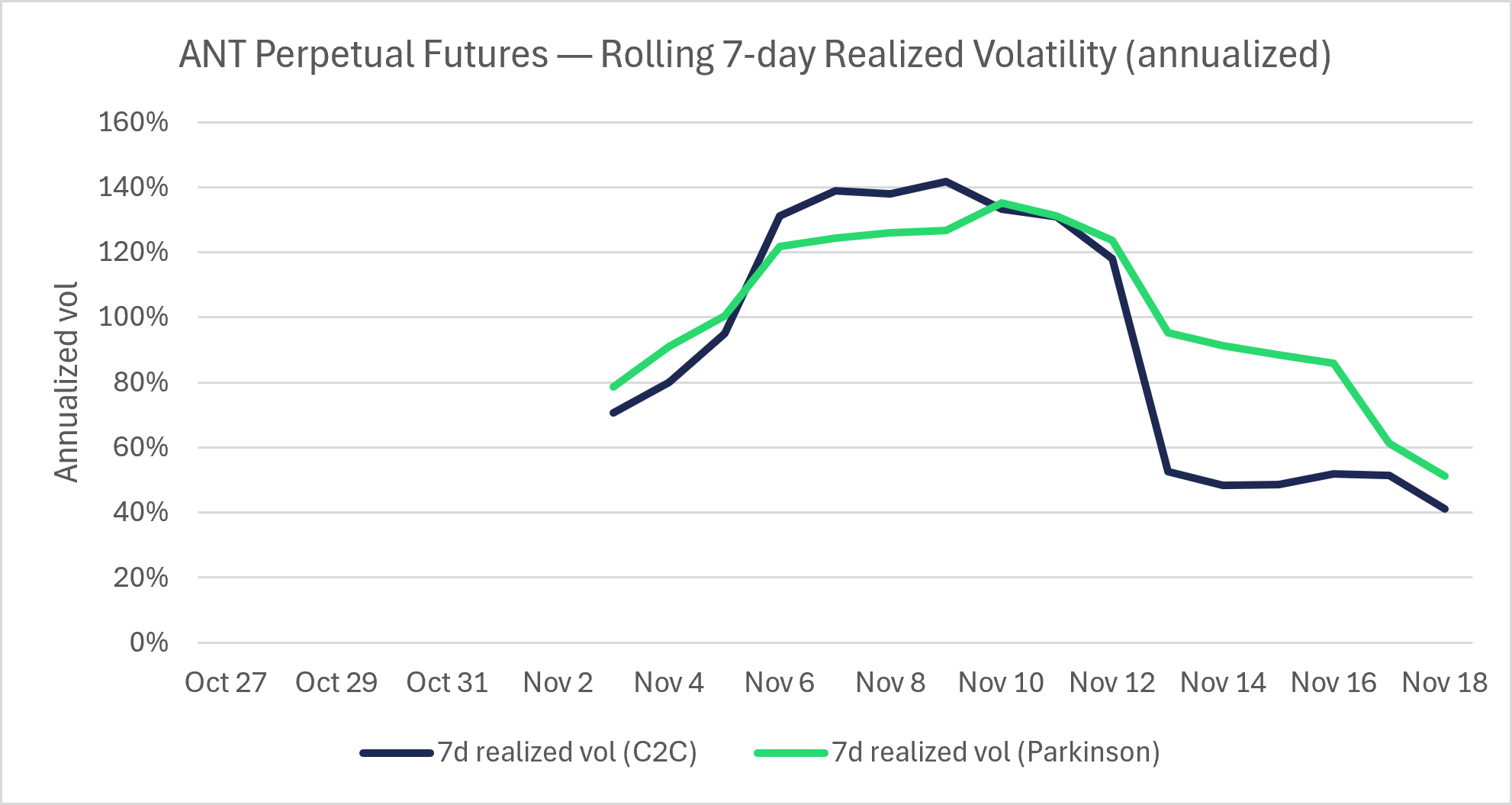
While ANT options will take time to reach equilibrium in pricing and implied volatility, pre-IPO perpetual futures on ANT showed realized volatility as high as 140% earlier this month, with 41% over the past week. Based on the small sample size and limited availability of these products, these figures may be taken as rough estimates of the range of implied volatility expected when options list.
Exhibit 1: Daily Price Snapshot of ANT Perpetual Futures
Source: https://app.hyperliquid.xyz/trade/xyz:ANT
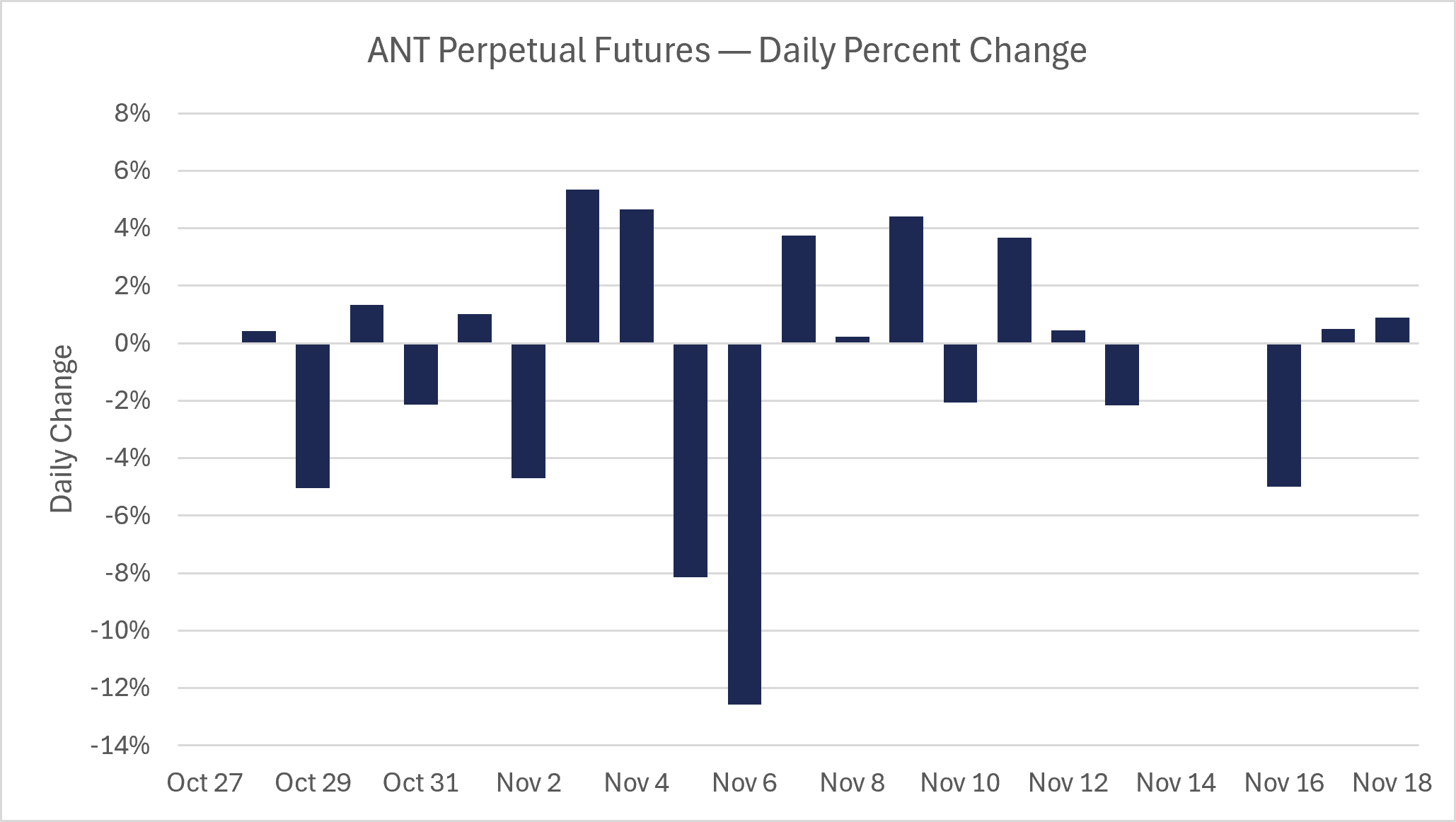
Exhibit 2: Daily Price Change of ANT Perpetual Futures
Source: https://app.hyperliquid.xyz/trade/xyz:ANT and Cboe
Exhibit 3: Realized Volatility Based on Daily Price Snapshot of ANT Perpetual Futures
Source: https://app.hyperliquid.xyz/trade/xyz:ANT and Cboe
A look at the IPO and subsequent option listing of SpaceX (NASDAQ: SPCX) can provide additional insight into how ANT options may trade after listing next week.
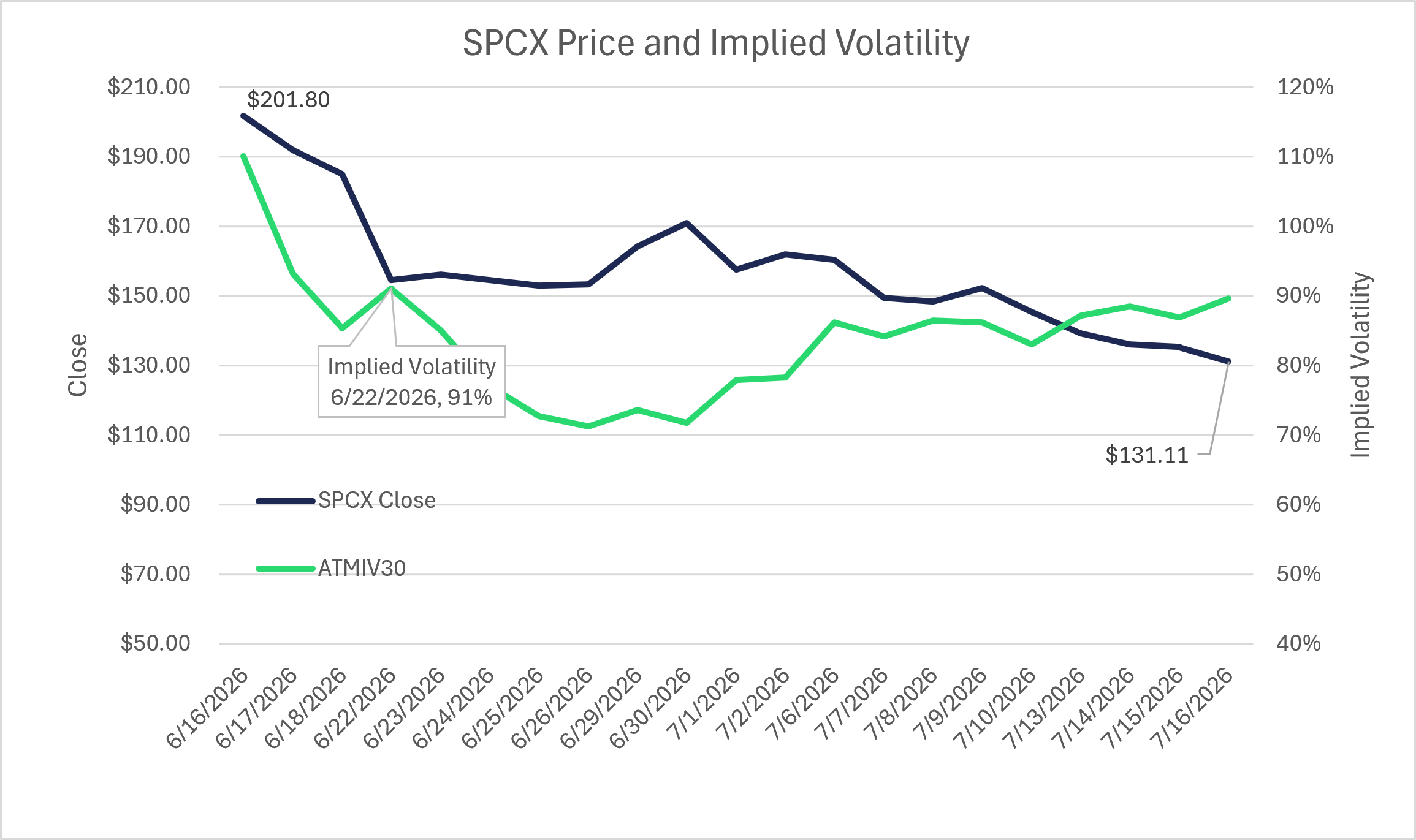
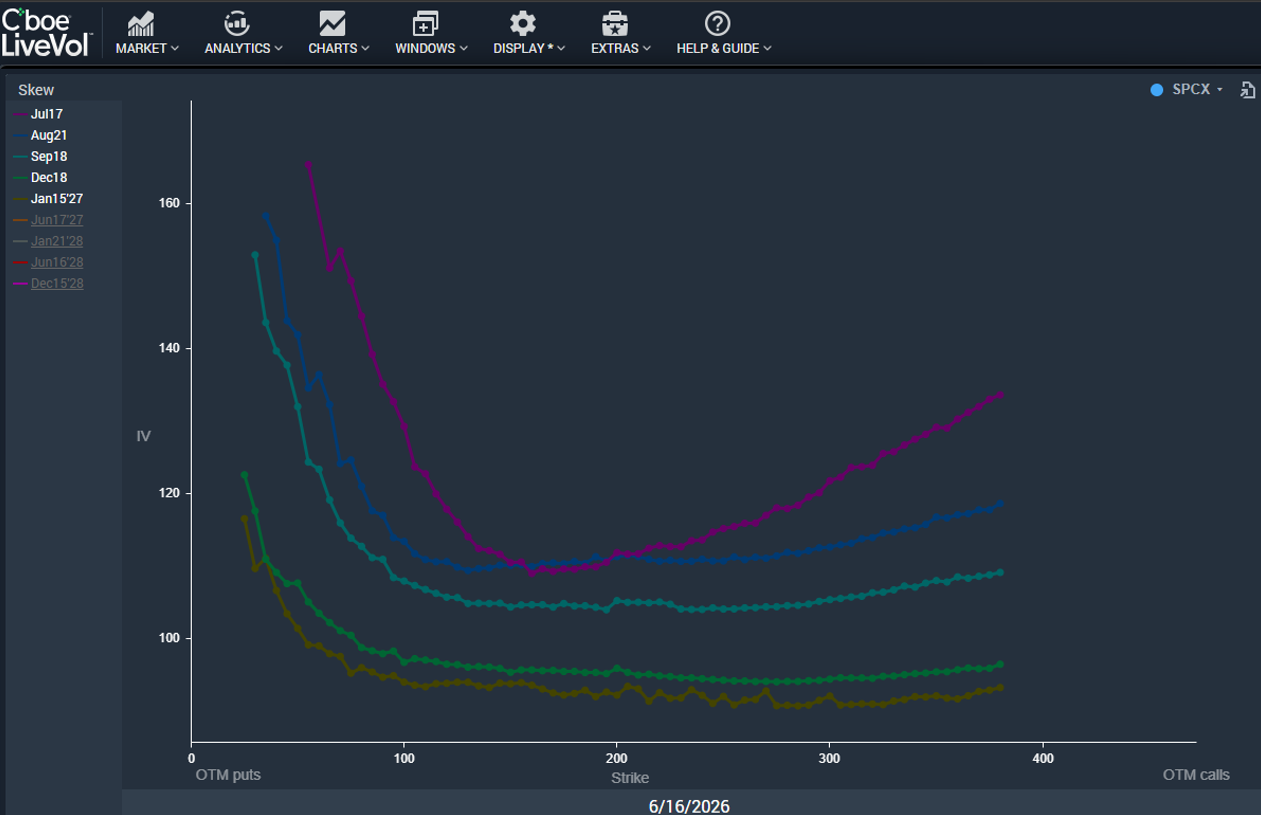
SpaceX options began trading on June 16, the second business day after shares debuted on June 12. The stock closed at $202 that day, then fell about 39% to $124 by July 17. At-the-money 30-day implied volatility opened near 110%, settled in the low 70s by late June, and climbed back to roughly 90% as the stock slid, ending above 20-day realized volatility, which peaked above 200% in late June and had eased to about 83%.
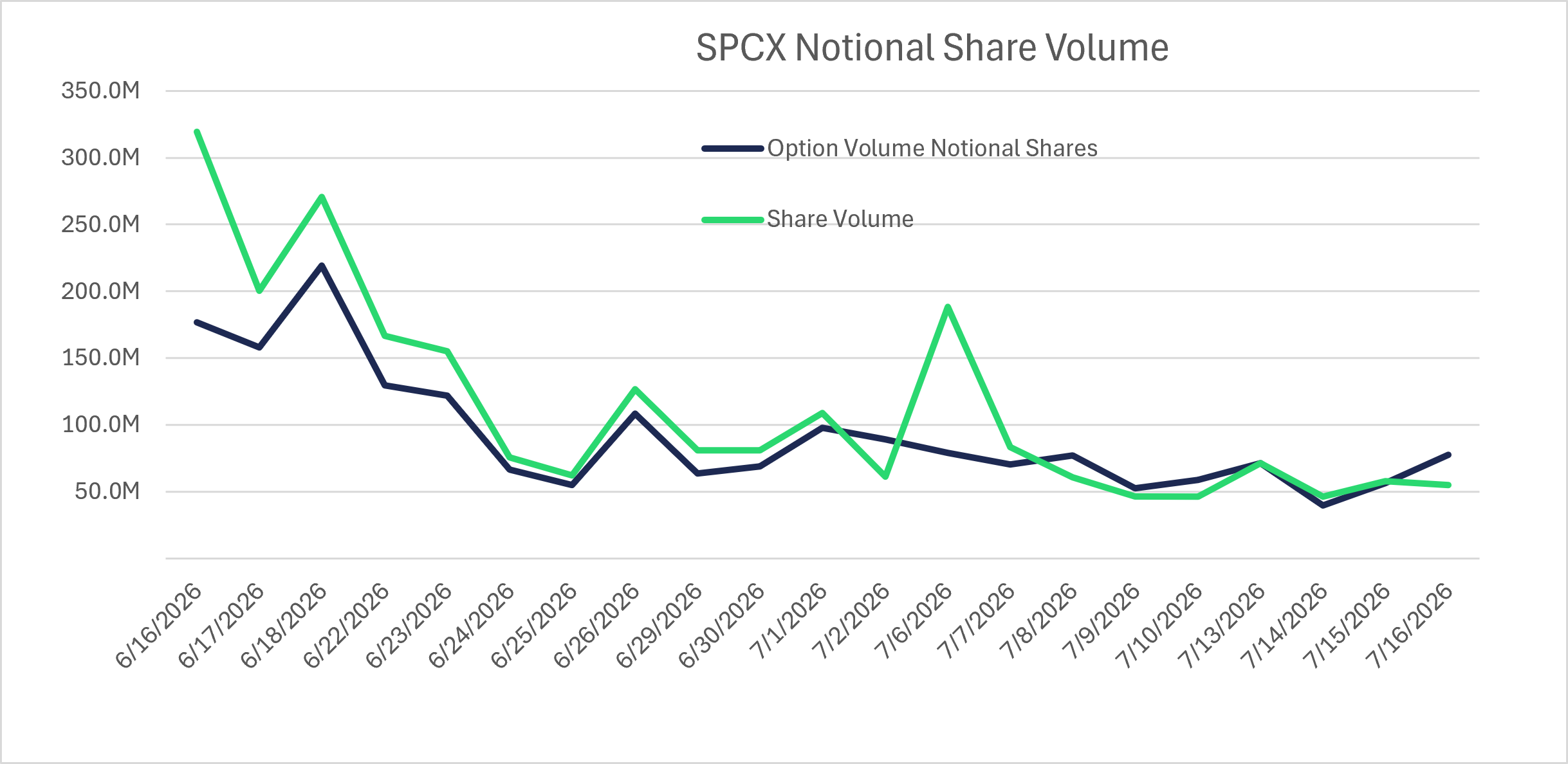
SPCX Options set a record volume with just under 1.8 million contracts traded the first day, and an ADV of roughly 1.6 million contracts per day the first week. In share terms (contracts x 100), option volume ran about 75% of stock volume over the first five sessions and has averaged more than 1.1 times stock volume since, through November 19. For scale, about 850 million ANT shares traded on its first day, roughly 1.6 times the roughly 522 million SpaceX shares traded on its debut. SpaceX volume settled to about 100 million shares a day within weeks, and first-day volume is unlikely to be repeated. Adjusting ANT's first-day volume in a similar fashion implies a normalized volume of about 210 million shares a day. Option volume ran at 55% to 75% of stock volume in SpaceX's first sessions; applying that range would estimate roughly 1.2 to 1.6 million ANT contracts per day, with expectations in the two million contract range if option volume reaches the 1.1 times stock volume that SpaceX has averaged since. Currently, the top five single stock option classes by ADV are NVDA (4.2 million), TSLA (1.9 million), AAPL (1.3 million), SPCX (1.3 million) and MU (1.2 million).
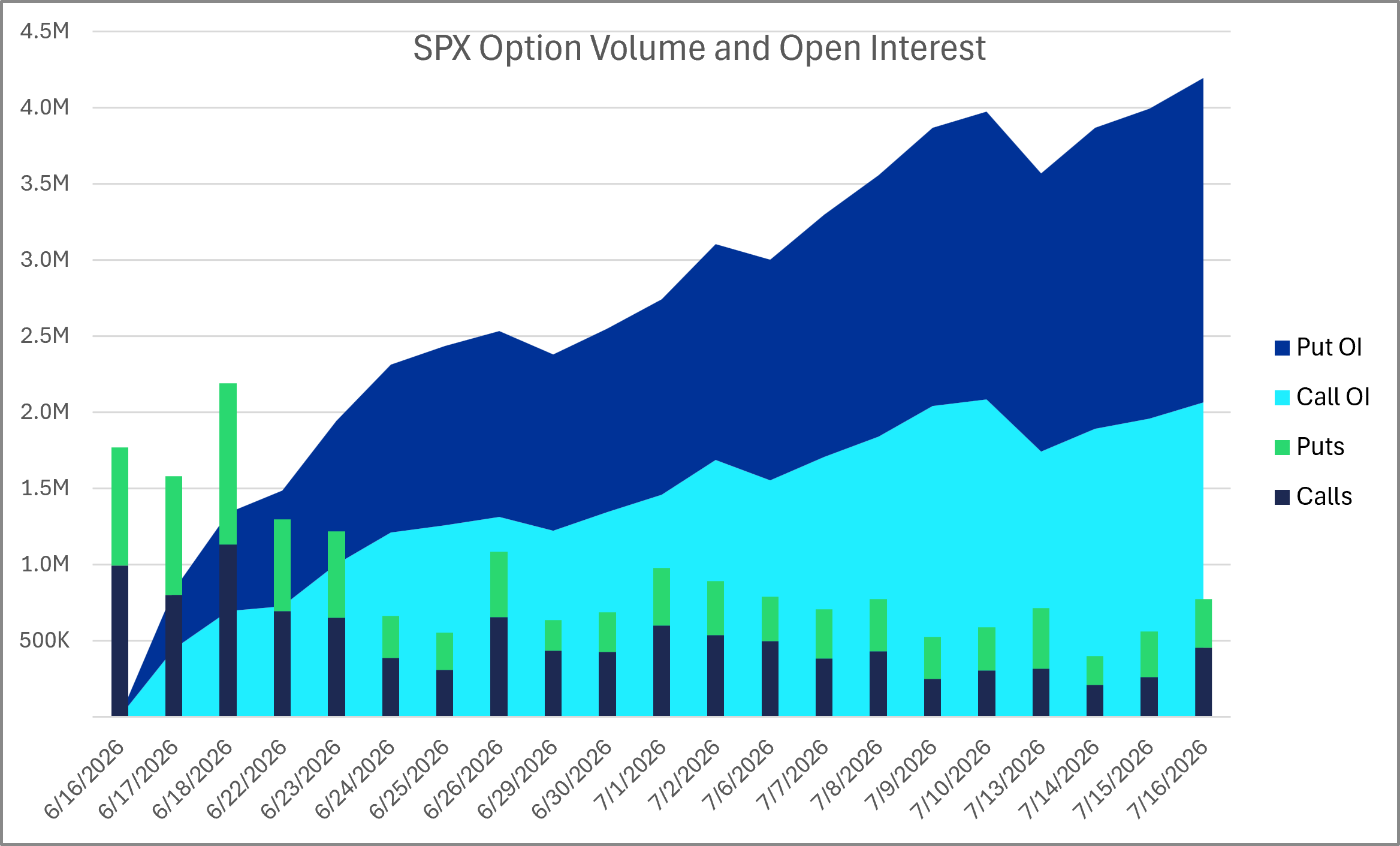
In SPCX, open interest built steadily even as daily volume leveled off, reaching about 4.5 million contracts. The put/call volume ratio averaged about 0.8 over that period, with a similar ratio of put to call open interest. Given the differences between the two companies, these figures should be taken as a rough guide on how ANT options may trade.
Exhibit 4: SPCX Option Volume and Open Interest
Source: Cboe
Exhibit 5: SPCX Price and Volatility
Source: Cboe
Exhibit 6: SPCX Implied Volatility Curves
Source: Cboe LiveVol Pro
Exhibit 6: SPCX Notional Volume
Source: Cboe
Given this year’s record levels of market-wide option volume, increased market volatility and intense focus on firms in the AI ecosystem, ANT options are likely to draw heavy interest as soon as they are available. Opening-day volume near two million contracts would set a new record and place ANT second among single-stock option classes, only behind NVDA. While option pricing dynamics for new issues are difficult to predict, available data suggests implied volatility may range from 50 to 100% or higher, with SpaceX — which opened near 110% and settled in the 70s — offering a reference point. Options liquidity, in terms of bid-ask spreads and market depth may take some time to form as the behavior of the newly listed shares is observed, however the intense focus on the stock and industry at large is likely to result in active trading by the investors, traders, asset managers and other market participants who use listed options to express their views and manage exposure.
There are important risks associated with transacting in any of the Cboe Company products discussed here. Before engaging in any transactions in those products, it is important for market participants to carefully review the disclosures and disclaimers contained at: Disclosures and Disclaimers Related to Cboe Options and Futures Products
Options involve risk and are not suitable for all investors. Prior to buying or selling an option, a person must receive a copy of Characteristics and Risks of Standardized Options (ODD). Copies of the ODD are available from your broker or from The Options Clearing Corporation, 125 S. Franklin Street, Suite 1200, Chicago, IL 60606.
These products are complex and are suitable only for sophisticated market participants. In certain jurisdictions, Cboe Company products are only permitted for investment professionals, certified sophisticated investors, or high net worth corporations and associations. These products involve the risk of loss, which can be substantial and, depending on the type of product, can exceed the amount of money deposited in establishing the position. Market participants should put at risk only funds that they can afford to lose without affecting their lifestyle.
The information provided is for general education and information purposes only. No statement provided should be construed as a recommendation to buy or sell a security, future, financial instrument, investment fund, or other investment product (collectively, a “financial product”), or to provide investment advice.
In particular, the inclusion of a security or other instrument within an index is not a recommendation to buy, sell, or hold that security or any other instrument, nor should it be considered investment advice. Past performance of an index or financial product is not indicative of future results. Brokerage firms may require customers to post higher margins than any minimum margins specified.